
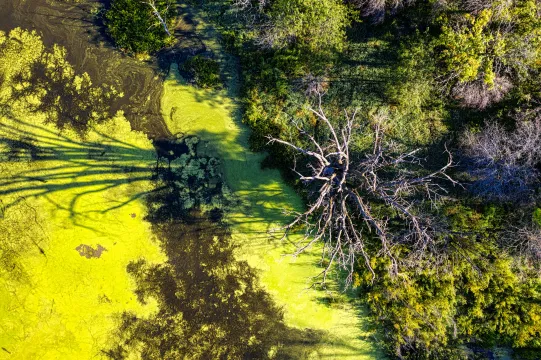
Cyanobacteria Hamful Algal Blooms
Provided by: Oregon Department of Environmental Quality|Published on: June 5, 2023
Grades: 9, 10, 11, 12, AP
Type: Podcasts
Subjects: Social Studies, Biology, Health
Authors: Oregon Department of Environmental Quality and Greenstate Podcast
Region: North America, USA - West, United States, Oregon
Languages: English
This resource has been reviewed by SubjectToClimate's climate scientists and verified for scientific accuracy and up-to-date information. Learn about our review process →
This resource has been reviewed by SubjectToClimate's climate scientists and verified for scientific accuracy and up-to-date information. Learn about our review process →
Synopsis
- This podcast describes the conditions under which harmful algal blooms form in Oregon and how these cyanobacteria blooms can affect people, pets, and water quality.
- It describes how pollution reduction can help prevent cyanobacteria blooms, what individuals can do to stay informed, and the ways that community members can report these occurrences.
Teaching Materials
Positives
- The professionals discuss how climate change may be increasing the prevalence of harmful algal blooms and begin to explain the ecology behind these phenomena.
- An interesting technology that uses satellite image analysis to detect harmful algae blooms is described.
- This podcast demonstrates how different stakeholders like drinking water specialists, environmental quality professionals, recreation professionals, and the community can all be invested in an environmental problem.
Additional Prerequisites
- Students should know the difference between cyanobacteria and algae, and they should be familiar with how different levels of these organisms can be positive or negative for a habitat.
- The podcast webpage includes links to sign up for health advisories in Oregon and to learn more about harmful algal blooms.
Differentiation
- Before listening to this podcast ask students, "How do you know if a body of water is safe to swim in or drink?"
- Since this is in audio format, it may be helpful to pull together a slideshow with pictures of cyanobacteria harmful algae blooms for students to see before or after the podcast is assigned.
- Encourage students to sign up for local health advisory messages related to water quality, using the links on the webpage, or researching local resources if students are not in Oregon.
- Have students research the algae blooms in other locations such as Florida, the gulf of Mexico, or their local area.
- Chemistry and biology students can link this podcast to lessons about nutrient cycles, nitrogen, phosphorus, and non-point pollution.
This podcast resource from the Oregon Department of Environmental Quality focuses on the issue of cyanobacteria harmful algal blooms (cyanoHABs) in Oregon waters. Experts from both the Department of Environmental Quality and the Oregon Health Authority explain what cyanoHABs are, what causes them, and the often serious health issues cyanoHABs can pose to both humans and animals. Efforts to better monitor Oregon’s water quality, both in recreational and drinking water supplies, and to keep Oregonians better informed of cyanoHABs are also discussed. The greatest benefit to most listeners from this podcast is the number of tips provided to help empower people to know what to do when they see potential cyanoHABs. All of the speakers are well informed and provide a thoughtful and thorough discussion of a serious public health concern. This podcast is valuable, both to inform students before water recreation and to start a more in-depth study of local water quality. This resource is recommended for teaching.
Teaching Tips
Standards
Resource Type and Format
Scientist Reviewed
This resource has been reviewed by SubjectToClimate's climate scientists and verified for scientific accuracy and up-to-date information. Our review process ensures that every resource in our library reflects the current state of climate science.
Learn about our review process →