

Endangered Species: 6 Stories of Success
Provided by: National Wildlife Federation|Published on: April 3, 2024
Grades: 3, 4, 5, 6, 7, 8
Type: Articles/Websites
Subjects: Biology, Civics
Authors: National Wildlife Federation
Region: North America, USA - Northeast, United States, New Jersey, Connecticut, New York, Maine
Languages: English

This resource has been reviewed by SubjectToClimate's climate scientists and verified for scientific accuracy and up-to-date information. Learn about our review process →
This resource has been reviewed by SubjectToClimate's climate scientists and verified for scientific accuracy and up-to-date information. Learn about our review process →
Synopsis
- In this article, students read about six once-endangered species whose populations have rebounded thanks to the United States Endangered Species Act and actions from various groups.
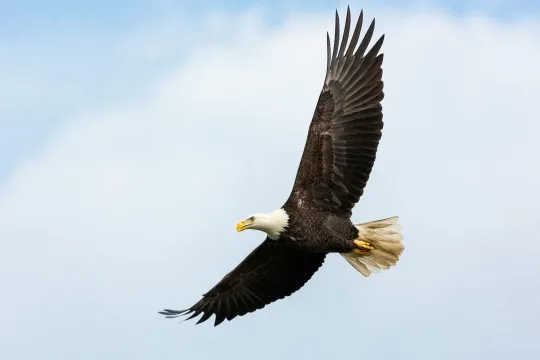
- The animals included in this article are the bald eagle, the Florida panther, the gray wolf, the grizzly bear, the peregrine falcon, and the red-cockaded woodpecker.
Teaching Materials
Positives
- Students will feel hopeful and inspired by these stories of success.
- Students can get involved using the links at the bottom of the page to sign a petition or attend a nearby event.
- Teachers can use this resource for Endangered Species Day, the third Friday in May each year.
Additional Prerequisites
- There are a few broken links in the article: "below 250 individuals" in the Florida panther section, "more than 700 bears" in the grizzly bear section, and "about 3,000 breeding pairs" in the peregrine falcon section.
- It may benefit students to know the terms endangered and extinct and how species qualify as one or the other.
Differentiation
- For younger students, consider reading the text as a class or assigning sections to small groups.
- Older students can use the links throughout the article to learn more about the different species and how they are protected.
- This resource connects with life science topics, such as endangered species, biodiversity, breeding, and conservation efforts.
- This resource connects with Earth science topics, such as climate change, deforestation, land-use changes, and pollution.
- Social studies or civics classes can use this resource to learn about the successes of the U.S. Endangered Species Act and other ways the U.S. government has protected wildlife through policies, bans, and compensation.
This resource discusses six endangered animals and efforts to save and care for their species and habitats. These animals are all native to the contiguous United States. The information presented is accurate, and this resource is recommended for teaching.
Teaching Tips
Standards
Resource Type and Format
About the Partner Provider

National Wildlife Federation
The mission of the National Wildlife Federation is to unite all Americans to ensure wildlife thrives in a rapidly changing world. The National Wildlife Federation believes that in order to save wildlife and ourselves, we need to ensure that all Americans have access to clean air and water, safe communities, easy and equitable access to nature, and protection from the ravages of climate change. NWF has a long and respected track record in the field of environmental education and is a leader in applying nature and wildlife conservation to improve K-12 student achievement, particularly in the STEM disciplines, and fostering youth leadership and environmental stewardship. Our programs allow individuals to explore, analyze and take action on many key environmental issues facing communities, such as climate change, wildlife conservation, and environmental justice, with the end result of creating healthy, resilient, just, and thriving communities.
Scientist Reviewed
This resource has been reviewed by SubjectToClimate's climate scientists and verified for scientific accuracy and up-to-date information. Our review process ensures that every resource in our library reflects the current state of climate science.
Learn about our review process →