

Living on Ice
Provided by: American Museum of Natural History|Published on: January 23, 2026
Grades: 3, 4, 5
Type: Articles/Websites
Subjects: Science
Authors: American Museum of Natural History, OLogy
Region: Polar Regions
Languages: English
This resource has been reviewed by SubjectToClimate's climate scientists and verified for scientific accuracy and up-to-date information. Learn about our review process →
This resource has been reviewed by SubjectToClimate's climate scientists and verified for scientific accuracy and up-to-date information. Learn about our review process →
Synopsis
- In this interactive resource from the American Museum of Natural History, students will explore the impact climate change is having on polar regions through online activities and self-assessments.
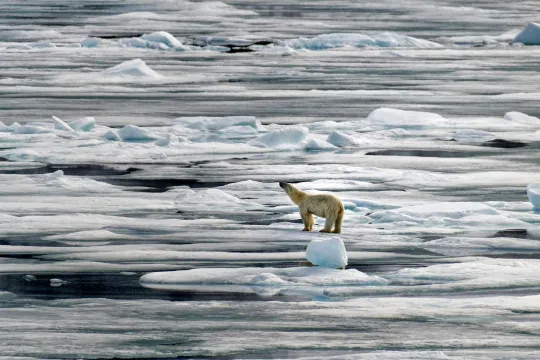
- Students will read and complete puzzles to learn how climate change is melting polar ice, having impacts on polar bears, seals, and other aspects of life in the polar regions.
Teaching Materials
Positives
- Automatic feedback allows students to self-check their understanding.
- The puzzles in this resource are simple, yet engaging.
Prerequisites
- Students may need help understanding what it means for an animal to be endangered.
- Students should have knowledge about climate change before exploring this resource.
Differentiation & Implementation
- The first paragraph on this resource contains links to pop-up cards where students can learn more about the vocabulary terms. Teachers can have students look at these in a jigsaw format, summarizing what they learn in one or two sentences to share with the rest of the class.
- Students can learn more about land ice, sea ice, and sea level rise with this video experiment.
- Teachers may want students to use headphones, as videos with narration will play once they complete an activity.
This resource from the American Museum of Natural History introduces students to life in the Arctic through interactive "Living on Ice" cards. The cards combine facts, puzzles, short videos, and “fact or fiction” questions to help students explore the challenges of survival in polar environments and how people adapt to extreme cold. Created by a trusted scientific institution, it doesn’t include original data but is a fun and informative way to spark classroom conversations about Arctic ecosystems, human adaptation, and the effects of climate change on icy regions.
Teaching Tips
Standards
Resource Type and Format
About the Partner Provider

American Museum of Natural History
The American Museum of Natural History is one of the world’s preeminent scientific and cultural institutions. Since its founding in 1869, the Museum has advanced its global mission to discover, interpret, and disseminate information about human cultures, the natural world, and the universe through a wide-ranging program of scientific research, education, and exhibition.
Scientist Reviewed
This resource has been reviewed by SubjectToClimate's climate scientists and verified for scientific accuracy and up-to-date information. Our review process ensures that every resource in our library reflects the current state of climate science.
Learn about our review process →