
Nourishing Students: Early Learners
Provided by: Center for Ecoliteracy|Published on: December 12, 2025
Grades: K, 1, 2
Type: Lesson Plans
Subjects: Science, Mathematics
Authors: Center for Ecoliteracy
Region: Global, California
Languages: English, Spanish
This resource has been reviewed by SubjectToClimate's climate scientists and verified for scientific accuracy and up-to-date information. Learn about our review process →
This resource has been reviewed by SubjectToClimate's climate scientists and verified for scientific accuracy and up-to-date information. Learn about our review process →
Synopsis
- In this collection of units from the Center for Ecoliteracy, students will become familiar with different edible plants through counting and measurement, games, art projects, stories, taste tests, and more.
- Each unit also has a bilingual take-home page that includes activities, recipes, and book recommendations for families to continue learning at home.
Teaching Materials
Positives
- The resource includes materials to be sent home to families, explaining what students are learning in the classroom and how families can support. This is a great way to involve families as stakeholders in their students' education.
- These activities do a great job of engaging students with activities that involve fine motor skills, opportunities for movement and hands-on learning, and chances for students to express their creativity.
Prerequisites
- Some activities require or suggest the use of children's books that teachers will need to acquire before teaching the lesson.
- Before implementing taste-testing portions of the units, teachers should be aware of any food allergies in the class.
- Teachers should also be aware of students with sensory processing difficulties or differences that may make taste-testing portions more challenging and any activities that require touching uncomfortable, especially the activity asking teachers to demonstrate pressure on students' palms.
Differentiation & Implementation
- These units include bilingual components that can be implemented in bilingual classrooms, Spanish classes, or ELL classes.
- When implementing the avocado resources, teachers may want to implement the Graph an Avocado activity before the other activities, as the data will not be as interesting if all students have not had the same experience with avocados at the time of graphing.
- If any of the suggested books are available in the school library, teachers can collaborate with library media staff to have these books on display during the class's library time.
- To build students' readiness for understanding climate change and its impacts, teachers can highlight that different fruits and vegetables can only grow in certain climates. This will build background knowledge for students to understand some of the agricultural impacts of climate change.
- Teachers can also draw students' attention to the fact that crops need stable amounts of water, sunlight, and nutrients to grow, which will build their background knowledge to support understanding of the effects of drought and nutrient depletion on agriculture.
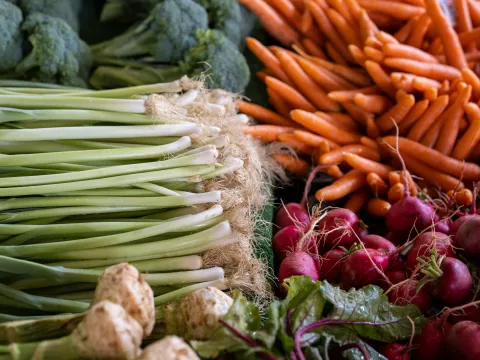
In these lessons, students will learn about different fruits and vegetables grown in California, including avocados, beans, carrots, cilantro, and radishes. Each fruit or vegetable has its own unit with an overview of the food, activities, gardening, and tasting ideas, as well as bilingual resources for families. The activities allow students to explore and learn about each piece of food and begin to understand where our food comes from and how it depends on the weather, climate, and environment. The information presented is accurate, and this resource is recommended for teaching.
Teaching Tips
Standards
Resource Type and Format
About the Partner Provider
Center for Ecoliteracy
The Center for Ecoliteracy advances the teaching and modeling of sustainable practices in K–12 schools. The organization builds partnerships and the capacity of K–12 schools to support healthy, sustainable school communities and food systems change in schools. The Center for Ecoliteracy leads systems change initiatives, publishes original books and resources, facilitates conferences and professional development, and provides strategic consulting. The organization works at multiple levels of scale, with local, regional, state, and national programs.
Scientist Reviewed
This resource has been reviewed by SubjectToClimate's climate scientists and verified for scientific accuracy and up-to-date information. Our review process ensures that every resource in our library reflects the current state of climate science.
Learn about our review process →