
Sharks and Rays
Provided by: LabXchange|Published on: March 4, 2026
Grades: 3, 4, 5
Type: Lesson Plans
Subjects: Science, English Language Arts
Authors: N*Gen
Region: Africa
Languages: English
This resource has been reviewed by SubjectToClimate's climate scientists and verified for scientific accuracy and up-to-date information. Learn about our review process →
This resource has been reviewed by SubjectToClimate's climate scientists and verified for scientific accuracy and up-to-date information. Learn about our review process →
Synopsis
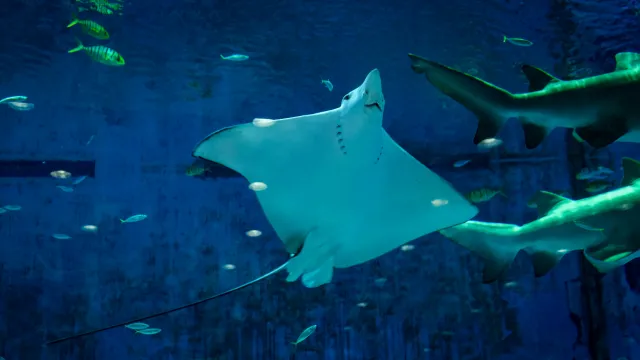
- This lesson centers around a 26-minute N*Gen video about marine ecosystems, the impact of overfishing on sharks and rays, and the impact of climate change on coral reefs.
- Students will write and perform a puppet show to demonstrate their learning, and write letters to their local government, calling for more Marine Protected Areas like the one in Zanzibar that is shown in the video.
Teaching Materials
Positives
- Students will love the use of songs and colorful animation in the video, as well as seeing other young students explore the marine protected area in Zanzibar.
- The video does an excellent job of introducing a movement break at a point when students may be feeling overwhelmed by the weight of climate change and its impact on coral.
Prerequisites
- Though climate change and global warming are briefly mentioned, it may benefit students to have background knowledge about the causes and impacts of climate change.
- Teachers will need to have cards, sticks, tape, and art materials on hand for the puppet show activity.
- Before writing the script for the puppet show, teachers may want to give a mini language arts lesson in which students read and analyze reader's theater scripts as mentor texts. Similarly, if students are writing letters to their government, teachers may want to give a language arts lesson on persuasive language and how to write a letter.
Differentiation & Implementation
- Teachers can pause at about 3:20 to check for understanding and have students write a definition for ecosystem, based on what they learned so far in the video. At about 8:30, teachers can pause the video to ask students to explain why corals need sharks and rays. At 18:24, teachers can pause for students to describe why sharks and rays are endangered, and what needs to be done to help them. At the end of the video, teachers can ask students what is happening to coral and what we need to do to stop it.
- After hearing about the impact of overfishing on shark populations, students may be interested in the topic. This lesson explores a solution to overfishing and bycatch that teachers can transition to after this sharks and rays lesson.
- Teachers can use this lesson to make connections to Sustainable Development Goal 14, Life Below Water.
This resource introduces students to marine ecosystems, with a focus on sharks, rays, and coral, framed by an engaging video. Focus is placed on mutualism in the coral reef. Threats, including climate change, are all presented in clear language with a focus on actions humans can take to protect the reefs and ocean ecosystems. This resource is recommended for teaching.
Teaching Tips
Standards
Resource Type and Format
About the Partner Provider

LabXchange
Harvard University’s LabXchange is a free online platform for science education, created with support from the Amgen Foundation. It makes learning science online flexible and fun, with interactives, lab simulations, and more.
Scientist Reviewed
This resource has been reviewed by SubjectToClimate's climate scientists and verified for scientific accuracy and up-to-date information. Our review process ensures that every resource in our library reflects the current state of climate science.
Learn about our review process →